Before You Apply for Funding: 5 Important Steps Every Family Should Know
Understanding your options is the first step toward finding the right mobility solution.
For many families raising a child with mobility challenges, finding the right adaptive stroller is only part of the journey.
The next question is often just as important:
"How are we going to pay for it?"
Adaptive mobility equipment can represent a significant financial investment. Families may consider private health insurance, Medicaid, charitable foundations, community grants, or other assistance programs.
But navigating these options can feel complicated, especially when you're unsure where to begin.
At iXROVER USA, we believe families deserve clear information, realistic expectations, and guidance before committing time and resources to a funding application.
Here are five important steps to consider.
1. Understand the Rider's Mobility and Positioning Needs
Before approaching an insurance company or funding organization, begin by understanding the rider's individual needs.
Ask yourself:
-
What mobility challenges affect everyday activities?
-
Does the rider need specialized seating or positioning support?
-
Is the current mobility equipment appropriate and sufficient?
-
What functional limitations should be evaluated by a healthcare professional?
-
How would the proposed equipment address the rider's documented needs?
For insurance-funded equipment, medical necessity is often a central consideration.
A healthcare provider or qualified therapist may need to document why specific equipment is clinically appropriate.
Important: A family's desire to participate in outdoor recreation is meaningful, but recreational benefits alone may not satisfy an insurer's medical-necessity requirements.
2. Identify Which Funding Programs May Be Relevant
Not every funding pathway works the same way.
Depending on the family's circumstances, possible options may include:
Private Health Insurance
Some insurance plans may cover qualifying mobility equipment when applicable medical-necessity, benefit, and documentation requirements are met.
Coverage depends on the specific policy, equipment classification, provider requirements, and other plan rules.
Medicaid and State Programs
Medicaid benefits and authorization procedures vary by state and program.
Some families may need to work with a participating durable medical equipment provider or an appropriate clinical specialist.
Charitable Foundations and Grants
Nonprofit organizations, disability-focused foundations, and community programs may offer financial assistance for eligible families.
Requirements may include residency, diagnosis, age, financial need, or the type of equipment requested.
Private Purchasing
Some families choose to purchase equipment directly, sometimes using available payment or financing options.
Each pathway has different requirements, and there is no universal solution.
3. Gather the Right Documentation Before Applying
Incomplete documentation can create unnecessary delays.
Depending on the funding program, families may be asked to provide:
-
A physician's prescription or medical order
-
A Letter of Medical Necessity (LMN)
-
A physical or occupational therapy evaluation
-
Relevant medical documentation
-
An equipment quotation
-
Insurance information or benefit details
-
Financial or residency information for charitable grants
Not every document is required for every funding source.
Before requesting clinical records or submitting an application, confirm exactly what the organization needs.
A well-organized application can make the review process easier, although it does not guarantee approval.
4. Understand the Role of Equipment Providers and Clinical Professionals
Insurance-funded mobility equipment may involve several different participants.
These can include the treating physician, physical therapist, occupational therapist, equipment supplier, and insurance administrator.
In some cases, families must work with an in-network or otherwise authorized durable medical equipment (DME) provider.
The provider may be responsible for equipment evaluation, documentation, coding, prior authorization, ordering, and delivery, depending on the payer's requirements.
It is important to clarify these responsibilities before proceeding.
At iXROVER USA, we can help families understand potential next steps and discuss available equipment options.
However, we do not guarantee that a particular product will qualify for insurance reimbursement.
5. Start With a Preliminary Funding Screening
One of the most useful steps a family can take is to evaluate potential funding pathways before beginning a full application.
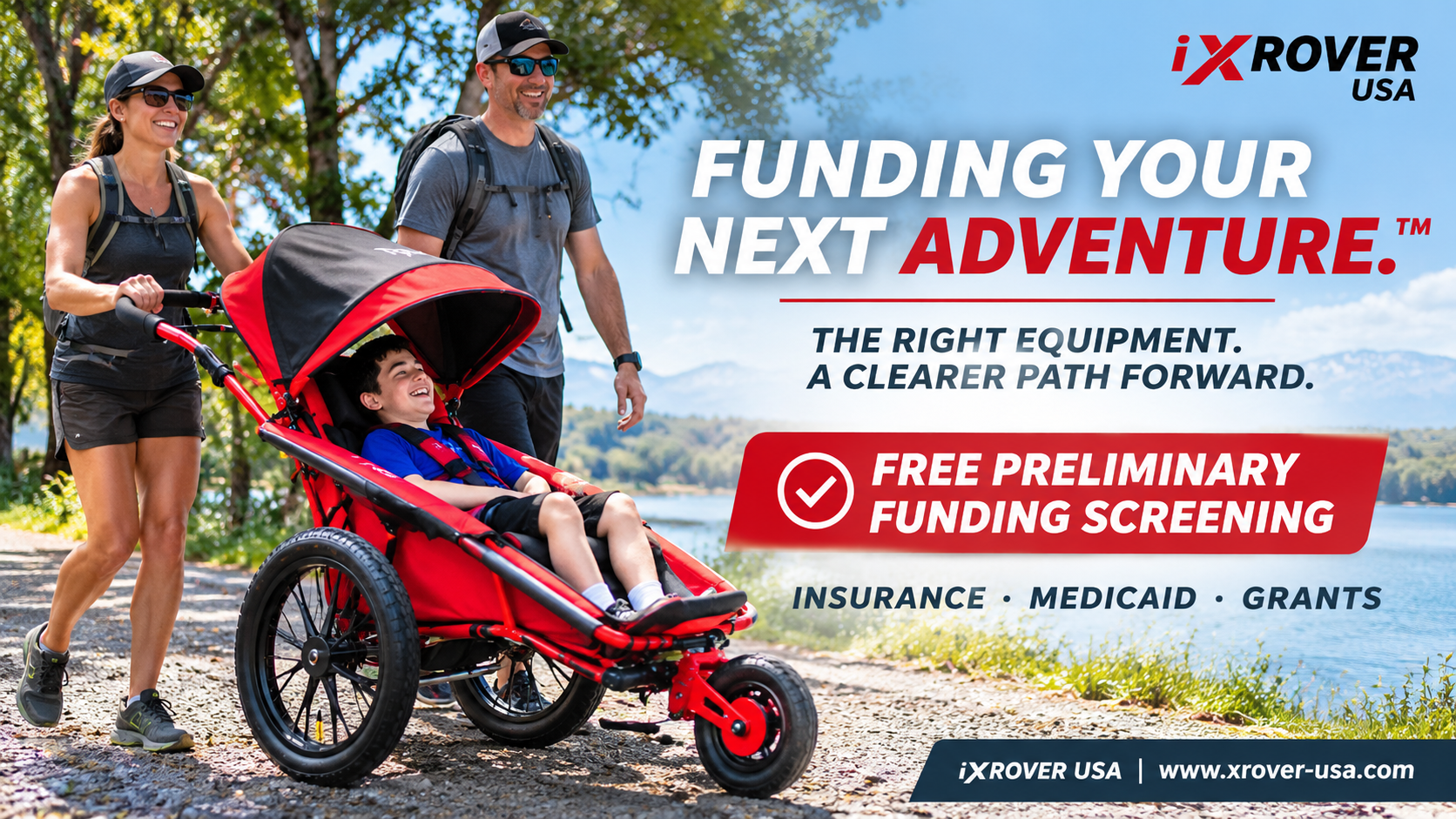
That's why iXROVER USA offers a FREE Preliminary Funding Screening.
Our initial review is designed to help families understand which options may be worth exploring.
We may ask for basic information such as:
-
The rider's age and state of residence
-
General mobility and positioning needs
-
The family's intended equipment and activities
-
The type of insurance or Medicaid coverage
-
Whether a physician or therapist is already involved
-
Whether the family is interested in charitable grants
Based on the information provided, we can help identify potential next steps.
The preliminary screening is informational. It is not an insurance eligibility determination, clinical evaluation, prior authorization, or promise of financial assistance.
Where a more detailed review is appropriate, we can explain the available next-stage services before the family decides whether to proceed.
What If Your Insurance Has Already Denied Coverage?
An insurance denial does not necessarily mean that every possible funding pathway has been exhausted.
Depending on the circumstances, families may be able to explore:
-
The reason for the denial
-
Applicable appeal or reconsideration procedures
-
Missing or incomplete clinical documentation
-
Alternative covered equipment options
-
Charitable grant opportunities
-
Other available assistance programs
Appeal deadlines and requirements vary. Families should review their insurer's written decision carefully and avoid missing applicable deadlines.
Not every denial can be overturned, and not every product is eligible for reimbursement.
The goal is to understand the available options before deciding what to do next.
You Don't Have to Navigate Every Step Alone
Every family has a different situation.
Some are just beginning to explore adaptive mobility equipment.
Others already have a physician's recommendation but don't know how to approach insurance.
Some have experienced a denial.
And others are looking for charitable assistance to help make a purchase possible.
At iXROVER USA, our goal is to help families make informed decisions through practical guidance, personalized product recommendations, and realistic discussions about funding.
Because access to information is an important first step toward greater mobility opportunities.
Helping Families Explore More Together™
Start With Your FREE Preliminary Funding Screening
Not sure whether insurance, Medicaid, or grants may be relevant to your situation?
Tell us a little about your family and the equipment you're considering.
CTA: Get Your FREE Preliminary Funding Screening
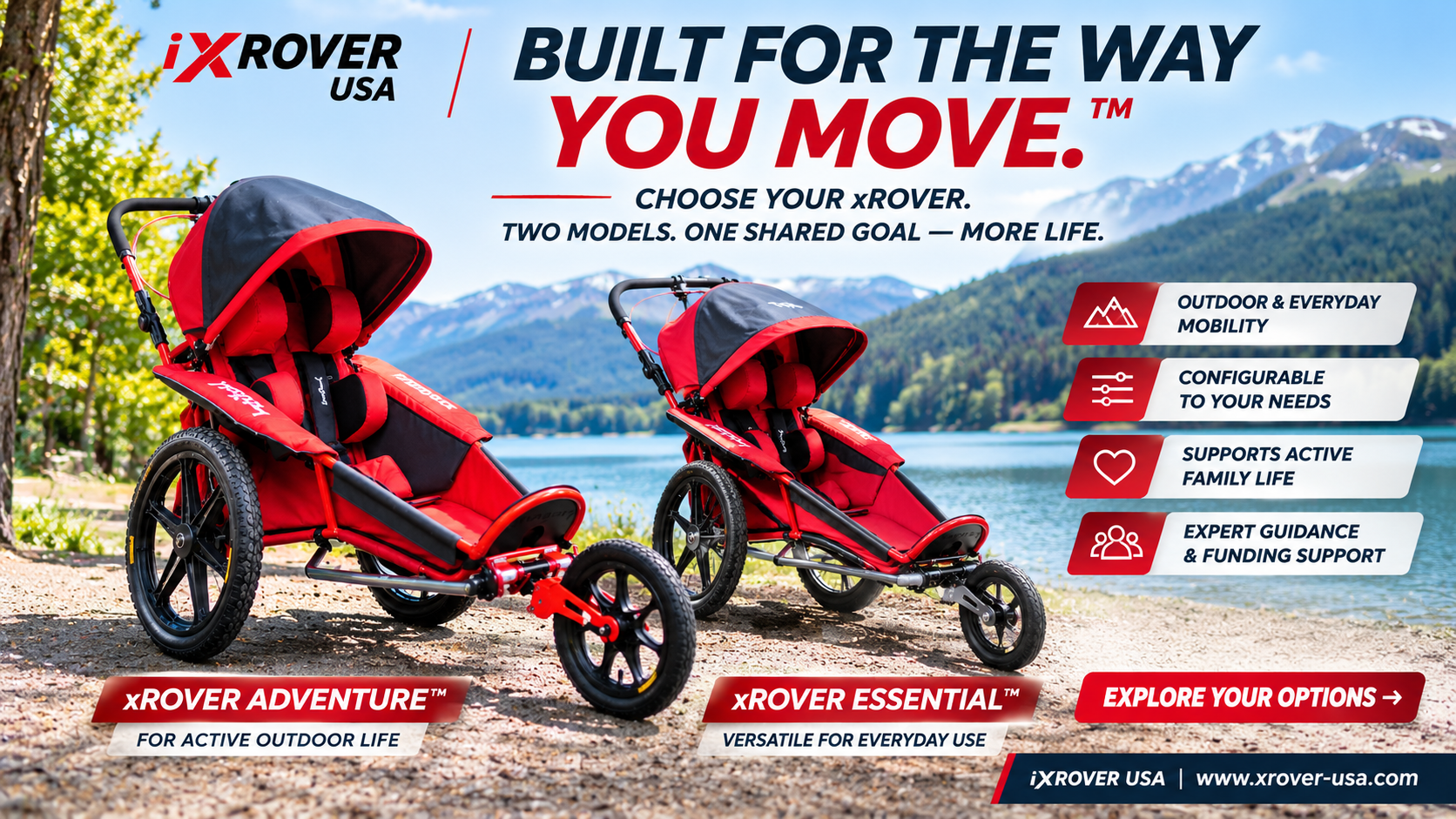
Explore xROVER ADVENTURE™
Discover available adaptive stroller models, sizes, configurations, and accessories designed for outdoor family activities.
CTA: Explore xROVER ADVENTURE™
Need Personalized Guidance?
Our team can help you understand product options and possible next steps based on your family's circumstances.
CTA: Contact iXROVER USA
iXROVER USA
Helping Families Explore More Together™