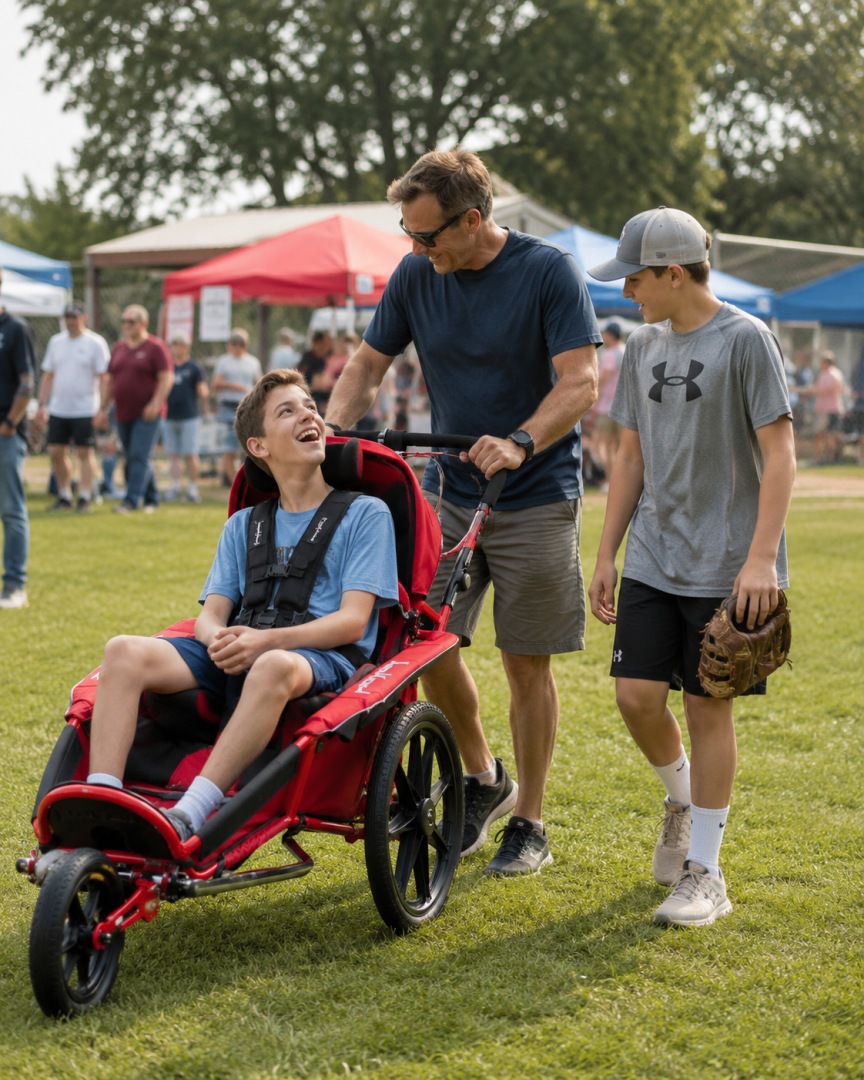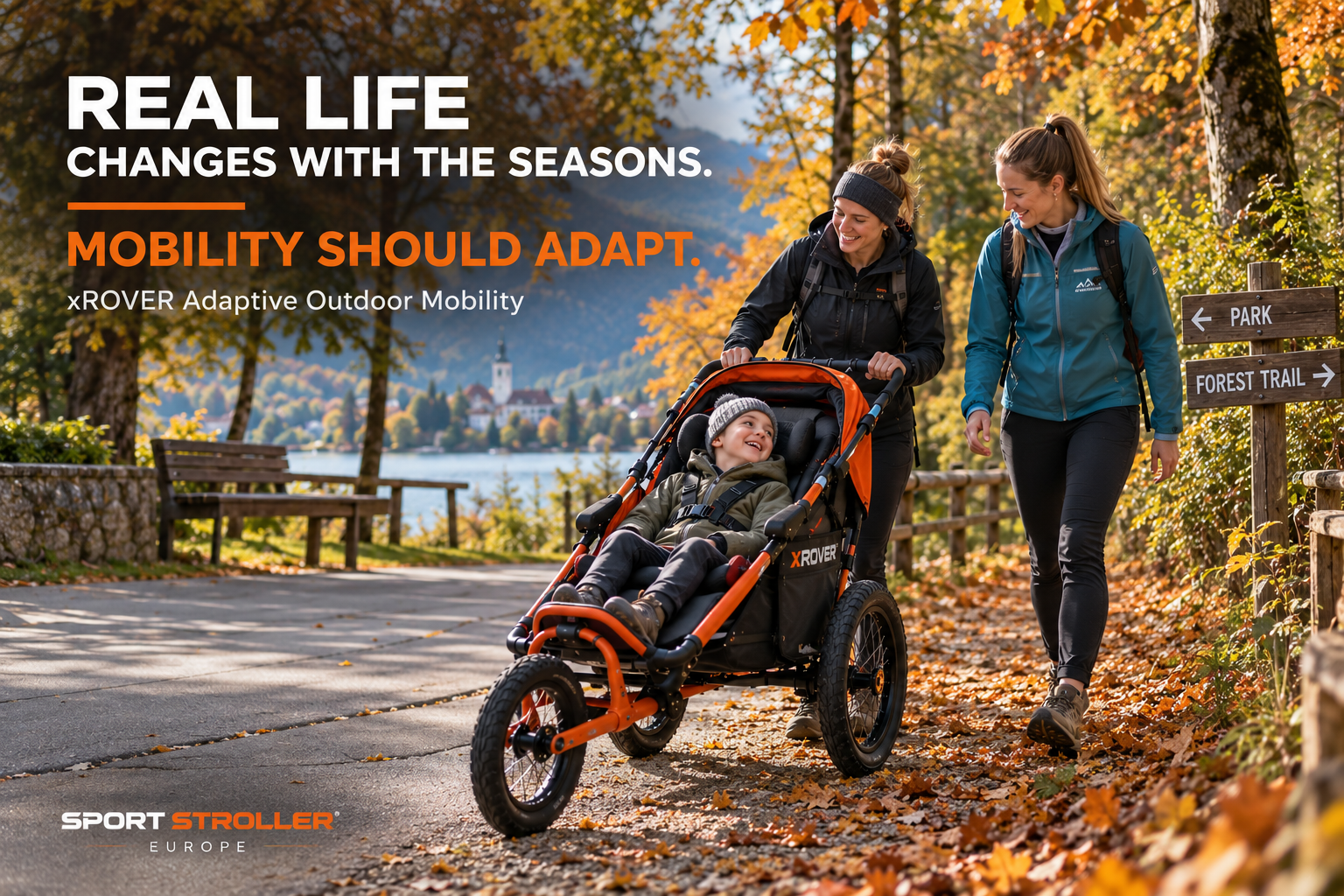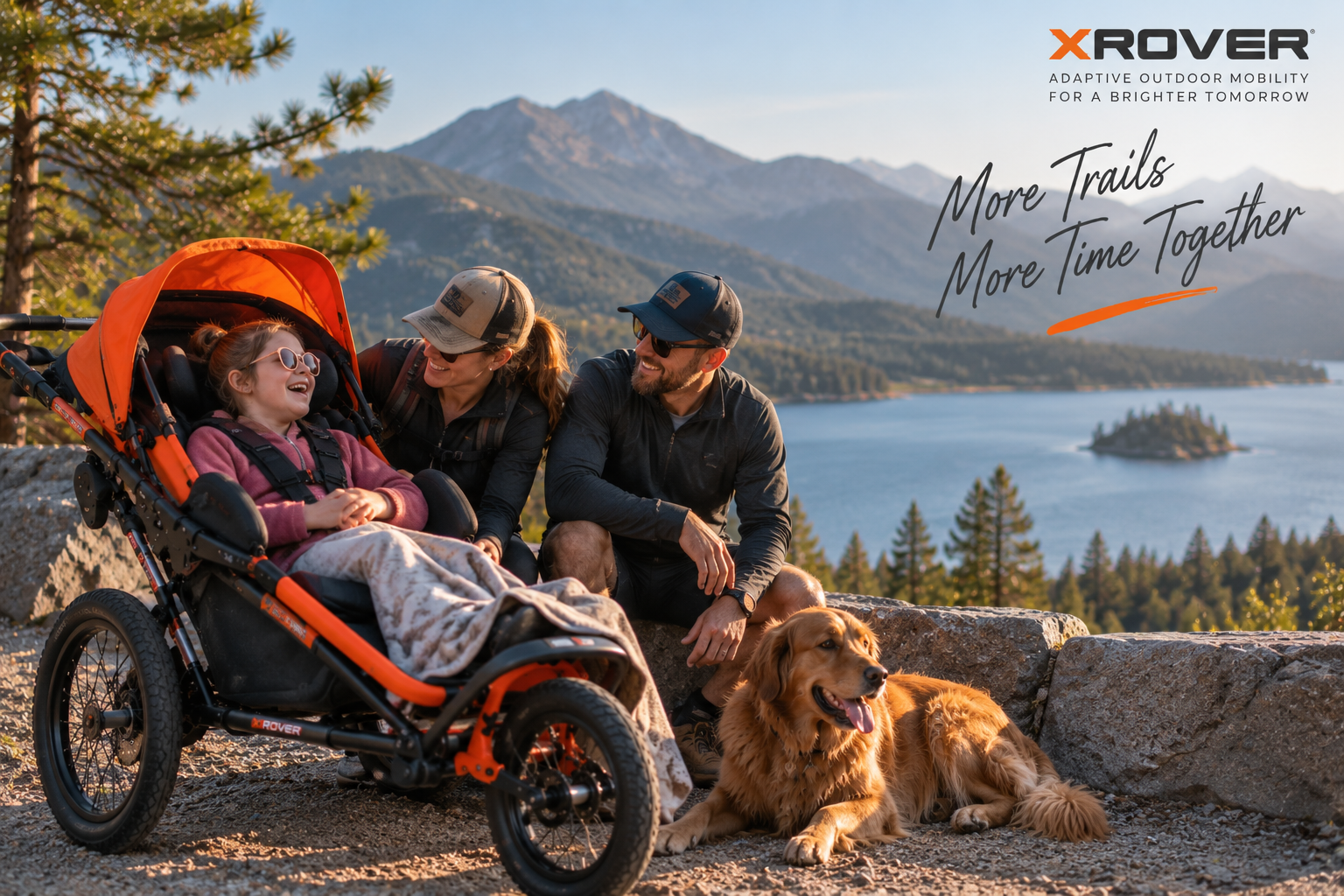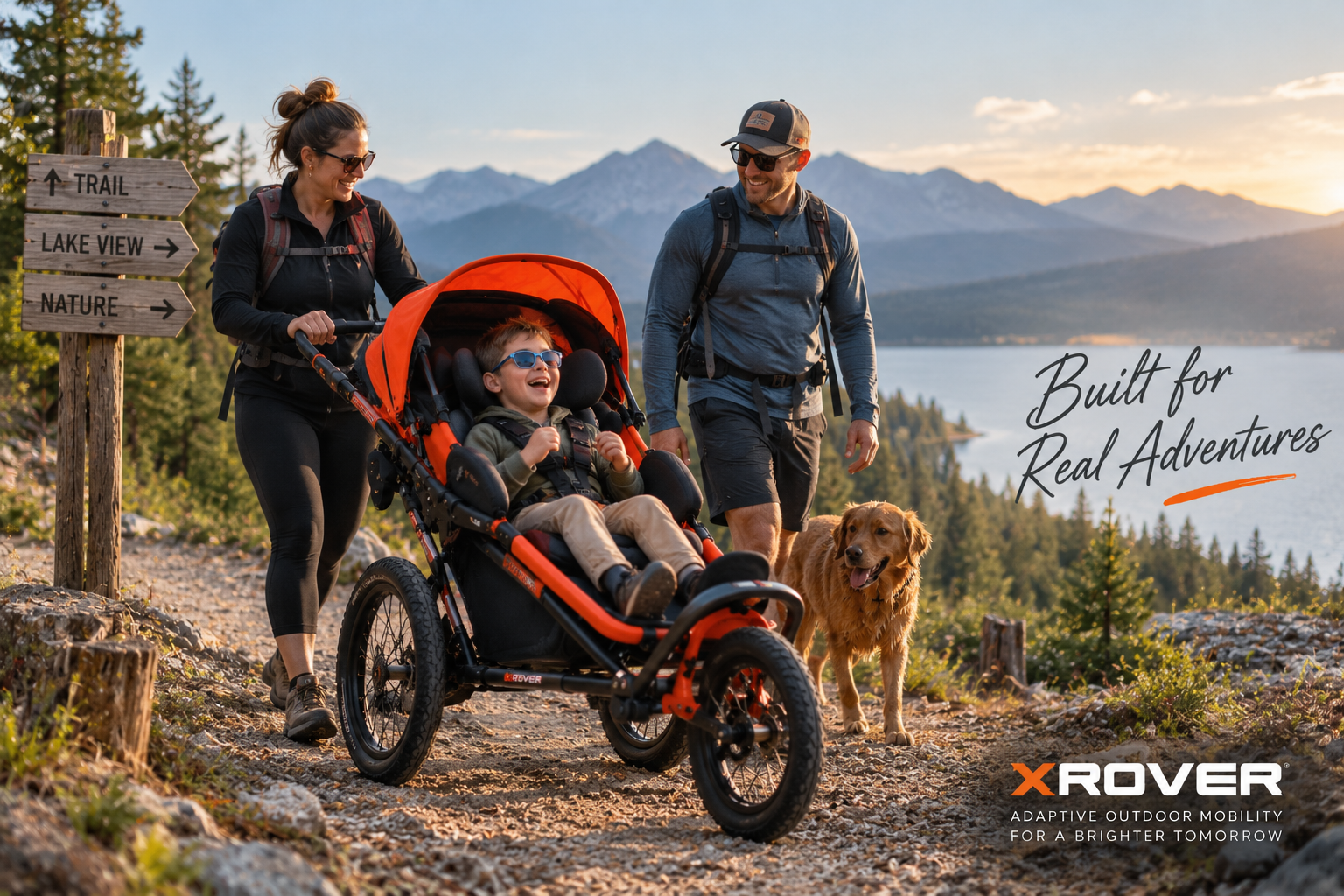
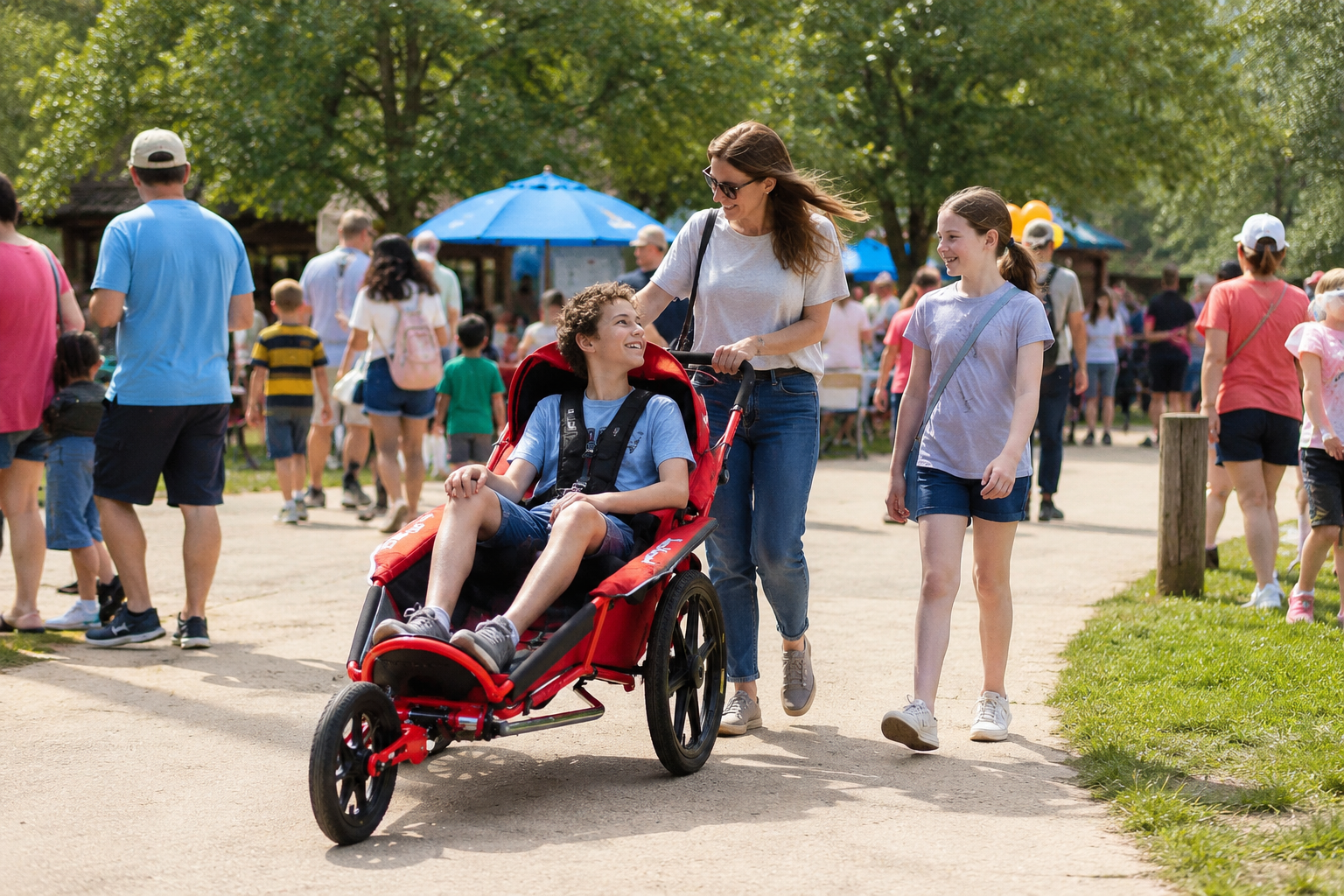
Adaptive outdoor mobility can help extend participation beyond everyday environments — into family, community and outdoor experiences.
Mobility equipment is often evaluated through measurable criteria.
Dimensions.
Weight capacity.
Positioning.
Safety.
Transportation.
All of these are important.
But there is another question worth asking:
What does this mobility solution allow the individual to participate in?
For many families, that question becomes especially important once they leave the home.
When Everyday Mobility Meets the Real World
A mobility solution may work extremely well in a home, school, medical facility or other accessible environment.
But family life does not happen only on smooth floors and paved surfaces.
It happens at parks.
On grass.
At a sibling's sporting event.
On vacation.
At the beach.
On trails.
At community events.
And sometimes the environment itself becomes the barrier.
This is where adaptive outdoor mobility can play a different role.
Complementing Everyday Mobility
At xROVER USA, we do not view adaptive outdoor mobility as a replacement for appropriate wheelchairs or other everyday mobility equipment.
For many individuals, it can instead be a complementary mobility solution.
A wheelchair may remain essential for everyday mobility, positioning and independence.
An adaptive outdoor stroller can provide another option when terrain, distance, fatigue or the nature of a family activity creates a different mobility challenge.
The question is not:
“Which mobility device is better?”
The better question is:
“Which mobility solution is appropriate for this environment and this individual's needs?”
Participation Looks Different for Every Individual
For one child, participation may mean completing a long family day at the zoo without becoming exhausted.
For another, it may mean joining siblings on a trail.
For a teenager or adult with limited endurance, it may mean being able to participate in a community event without worrying about the distance involved.
For a wheelchair user, it may mean accessing grass, sand or uneven terrain that would otherwise make a family activity difficult.
Different individuals.
Different needs.
Different environments.
But the underlying objective is often the same:
To make participation possible.
Why Individual Assessment Matters
This is also why selecting adaptive mobility equipment should involve more than matching height and weight to a product.
Mobility level matters.
Endurance matters.
Positioning matters.
Transfers matter.
Transportation matters.
The environments in which the equipment will be used matter.
And the goals of the individual and family matter.
When appropriate, input from a physical therapist, occupational therapist or physician can also help clarify functional and positioning needs.
At xROVER USA, these considerations form part of how we approach an individual recommendation.
Designed for Participation Beyond the Home
Our philosophy at xROVER USA is simple:
Mobility should support life — not define its boundaries.
That is why we increasingly think about xROVER not simply as an adaptive stroller, but as part of a broader approach to Adaptive Outdoor Mobility.
The objective is not to promise that every environment becomes accessible.
It is to help families expand the range of experiences they may be able to enjoy together.
Because sometimes the most meaningful measure of mobility is not how far a device can travel.
It is whether the person using it gets to be part of what happens when the family arrives.
Talk With xROVER USA
If you are considering an adaptive mobility solution for your child, teenager or family member, tell us about their mobility needs and the activities you would like to enjoy together.
We can help you identify an appropriate next step.
xROVER USA
Adaptive Outdoor Mobility Specialist
Peter Kral, President
📩 peter.kral@ixroverfl.com
📞 +1 (941) 278-2882
🌐 xROVER-USA.com